Building D1, Golf Central Palm Hills, New Giza, Egypt
Digital Twin
DigitalTwin
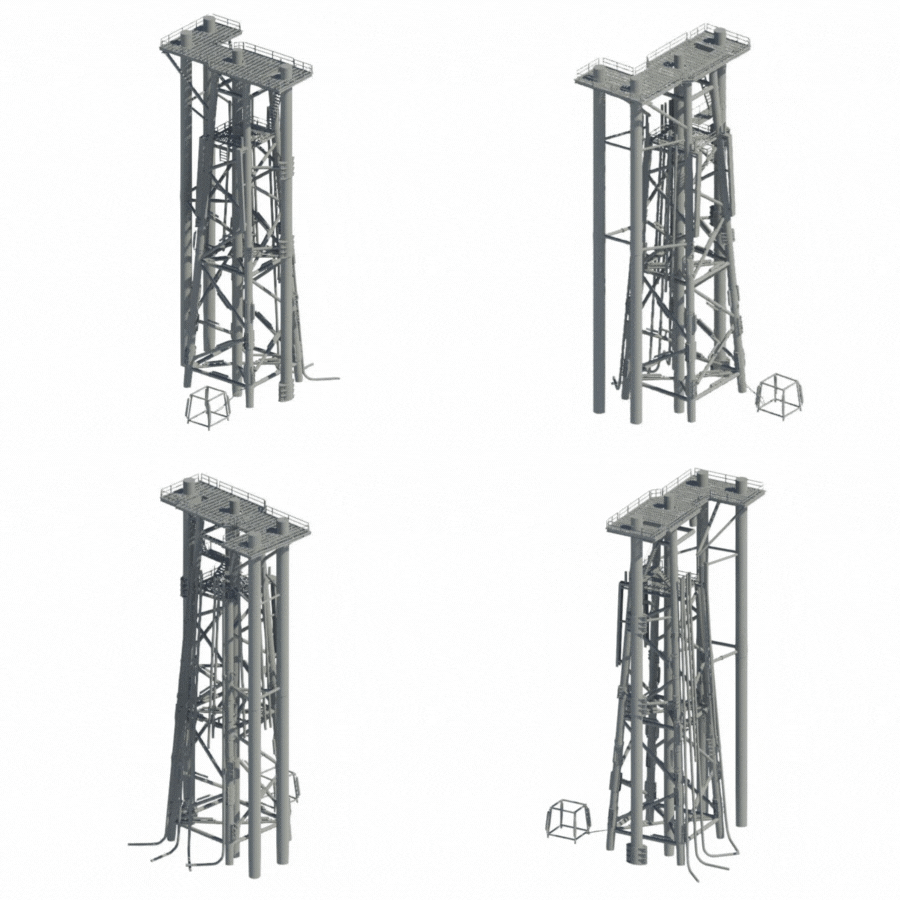
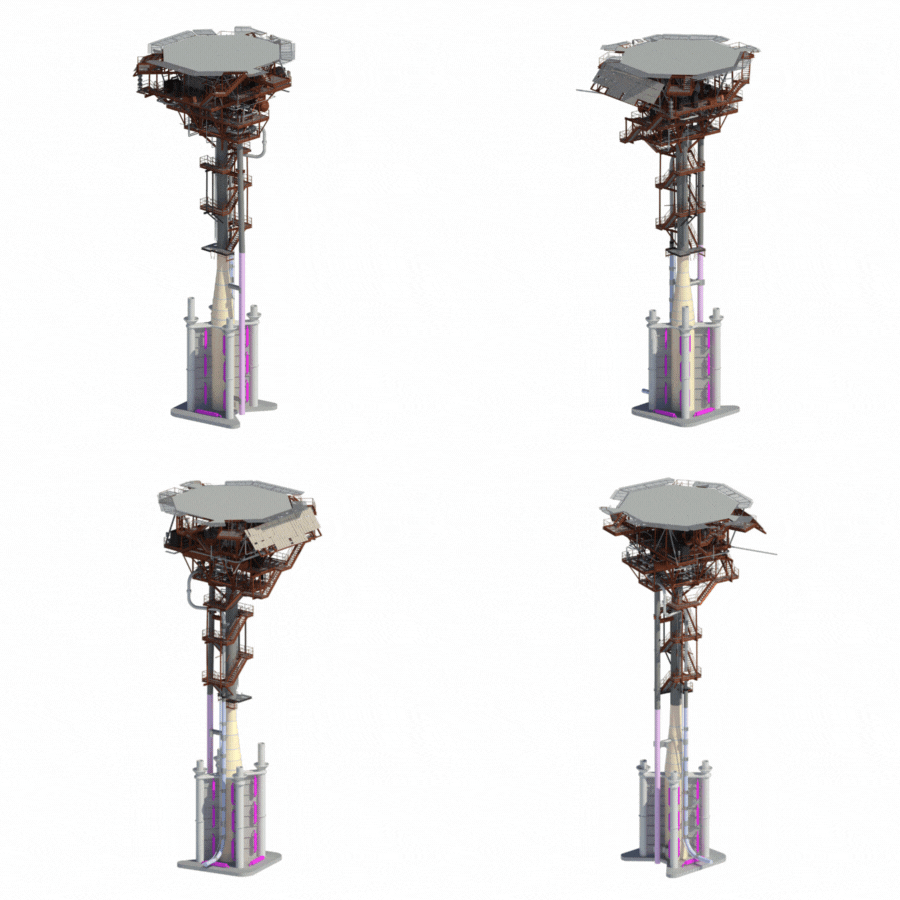
A digital twin is a digital model of an intended or actual real-world physical product, system, or process (a physical twin) that serves as the effectively indistinguishable digital counterpart of it for practical purposes, such as simulation, integration, testing, monitoring, and maintenance.
It is a set of adaptive models that emulate the behavior of a physical system in a virtual system getting data to update itself along its life cycle. This digital twin replicates the physical system to predict failures and opportunities for changing, to prescribe real time actions for optimizing and/or mitigating unexpected events observing and evaluating the operating profile system. Digital twins are the result of continual improvement in modeling and engineering.
Keybenefits
Using 3D, simulate to anticipate clashes and bad integration.
To re-design (brownfield projects).
Using 3D and scan, estimate weight of an equipment, package or module to assess if a weight control is required before lifting.
Prepare maintenance plan from an imaged digital twin.
Check asset information from an imaged digital twin.
Collaborate with a live visual support.
Visualize asset information from a virtual visit.
List Carry Over Work items to ease scope handover, estimation and job execution.
Deliver safety induction from a virtual visit of the asset focus on specific danger linked to the current context of the site.